
COURSE
Batch 35 64 lessons ₹17,900.00PROFESSIONAL TRADING EDUCATION

NIFTY
+0.13%
BANKNIFTY
+0.30%
SENSEX
+0.01%
OFFER
Batch 35 ₹48,000.00 → ₹17,900.00 63% OFFCOURSE
Open Desk: Market Structure 3 lessons FreeCOURSE
Risk Process Desk 5 lessons ₹10.00OFFER
Risk Process Desk ₹12,999.00 → ₹10.00 100% OFFCOURSE
Price Action Foundations 6 lessons ₹9,999.00OFFER
Price Action Foundations ₹14,999.00 → ₹9,999.00 33% OFFCOURSE
Batch 39 0 lessons ₹17,900.00OFFER
Batch 39 ₹48,000.00 → ₹17,900.00 63% OFFLIVE
Live classroom Session clock · not a signal LIVENSE · live session
00:00:00Watch
Our Videos
Full class recordings.
Ict complete course 18hours+ | Important notice
ICT Complete Course in hindi | ICT Full Mentorship2025
Expose My P&L & day trading !
Live trade besed on my Secret Strategy | Trading Challenge Day 2 #tradingchallenges #smc #ict
My Channel will delete ! #trading #ict #smc
0 to Advance Price Action Course | Price Action Full Course in Part 1 hindi #priceaction #trading
Live class
Live Trades
Example trades from class. Not a profit promise.
INFY
MANUAL
SELL
ACTIVE
Classroom
- Target1,588
- Entry1,620
- Invalidation1,648
R:R 1 : 1.14
Mark 1,620
31 Aug, 21:17
BANKNIFTY
MANUAL
SELL
ACTIVE
Classroom
- T250,300
- Target50,650
- Entry51,200
- Invalidation51,550
R:R 1 : 1.57
Mark 51,200
31 Aug, 21:17
NIFTY
MANUAL
BUY
ACTIVE
Classroom
- T225,140
- Target25,020
- Entry24,850
- Invalidation24,680
R:R 1 : 1.00
Mark 24,850
31 Aug, 21:17
Classroom
Why Choose Us
Short clips from the classroom.
No clips published yet.
Learn
Our Courses
Pick a course and start learning step by step.
01
Courses
Structured paths with preview lessons
02Free Lessons
Watch free videos and notes
03Demo Class
Book a free intro class
04Webinars
Join a live online class
ALL
all
63% OFF
Batch 35
 beginner
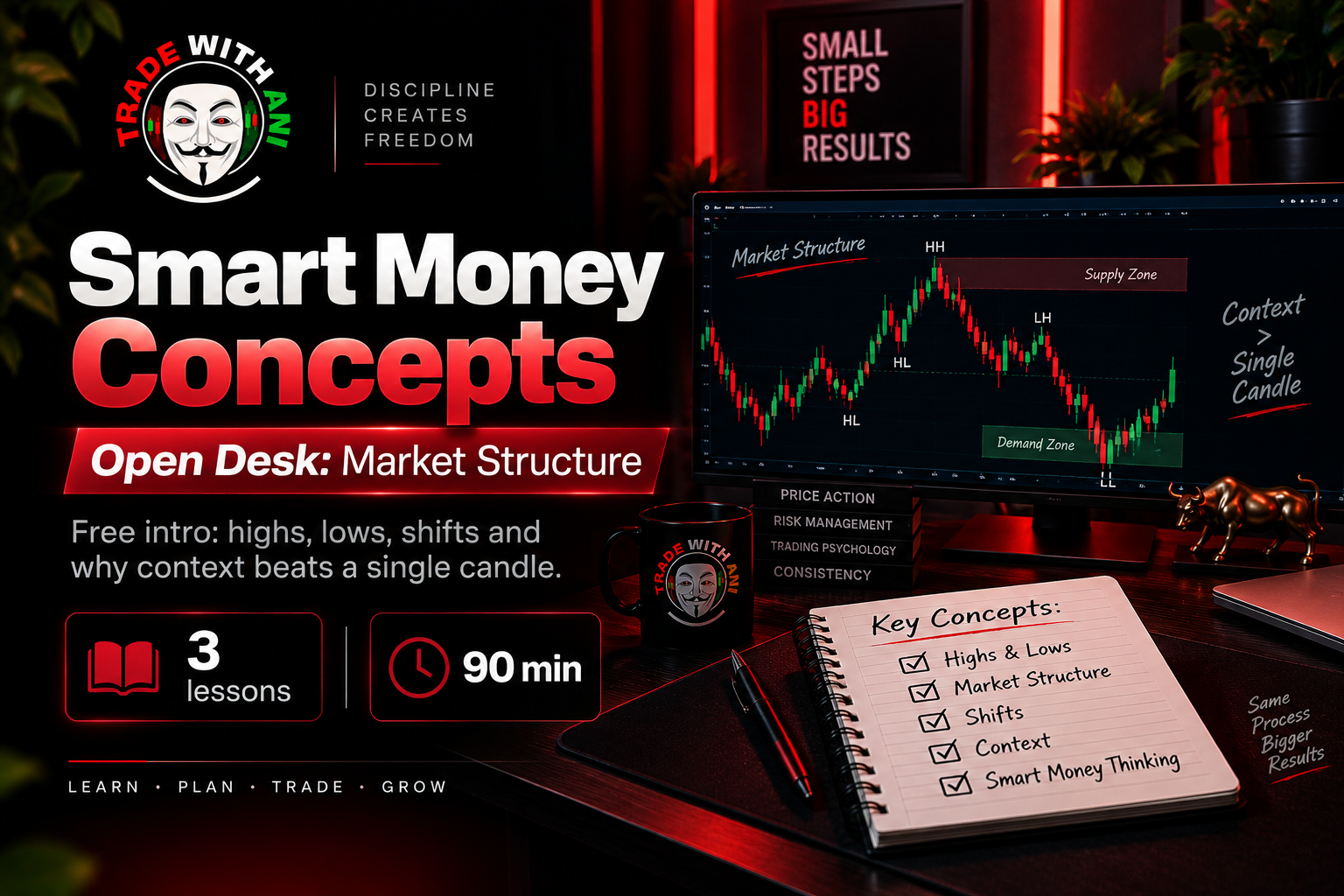
Smart Money Concepts
Open Desk: Market Structure
Free intro: highs, lows, shifts and why context beats a single candle.
Free
View
 intermediate
100% OFF
intermediate
100% OFF
Risk & Psychology
Risk Process Desk
Stop, size, R:R and review. the operating system around every idea.
 beginner
33% OFF
beginner
33% OFF
Price Action
Price Action Foundations
Read swings, mark invalidation, and plan trades from the chart. without indicator overload.
BEGINNER
beginner
63% OFF
Batch 39
BEGINNER
beginner
Offline batch 1
₹48,000.00
View
Free
Free Lessons
Start here. No payment needed.

Risk Management
Position size is the strategy
Classroom sizing: risk a small, predefined fraction of capital per idea. Size from stop distance. Education only.
Open lesson
Price Action
How we label swings
A swing is a pivot you can defend on the chart. not a story after the candle closes.
Open lesson
Price Action
Invalidation before entry
If you cannot point to the level that proves you wrong, you do not have a trade. you have a hope.
Open lessonTry a class
Free Demo Class
Book a seat. We will email you the details.
Online class
Webinars
Students
What Students Say
Blog
Market Notes
Simple notes on how we read the market.

Higher timeframe map, lower timeframe trigger
Daily or 4H tells you the dealing range. A 5-minute candle does not rewrite that map.
Read the note
Support is an area, not a magic line
A single pip line is a story. A defended area is a map. Classroom notes only.
Read the note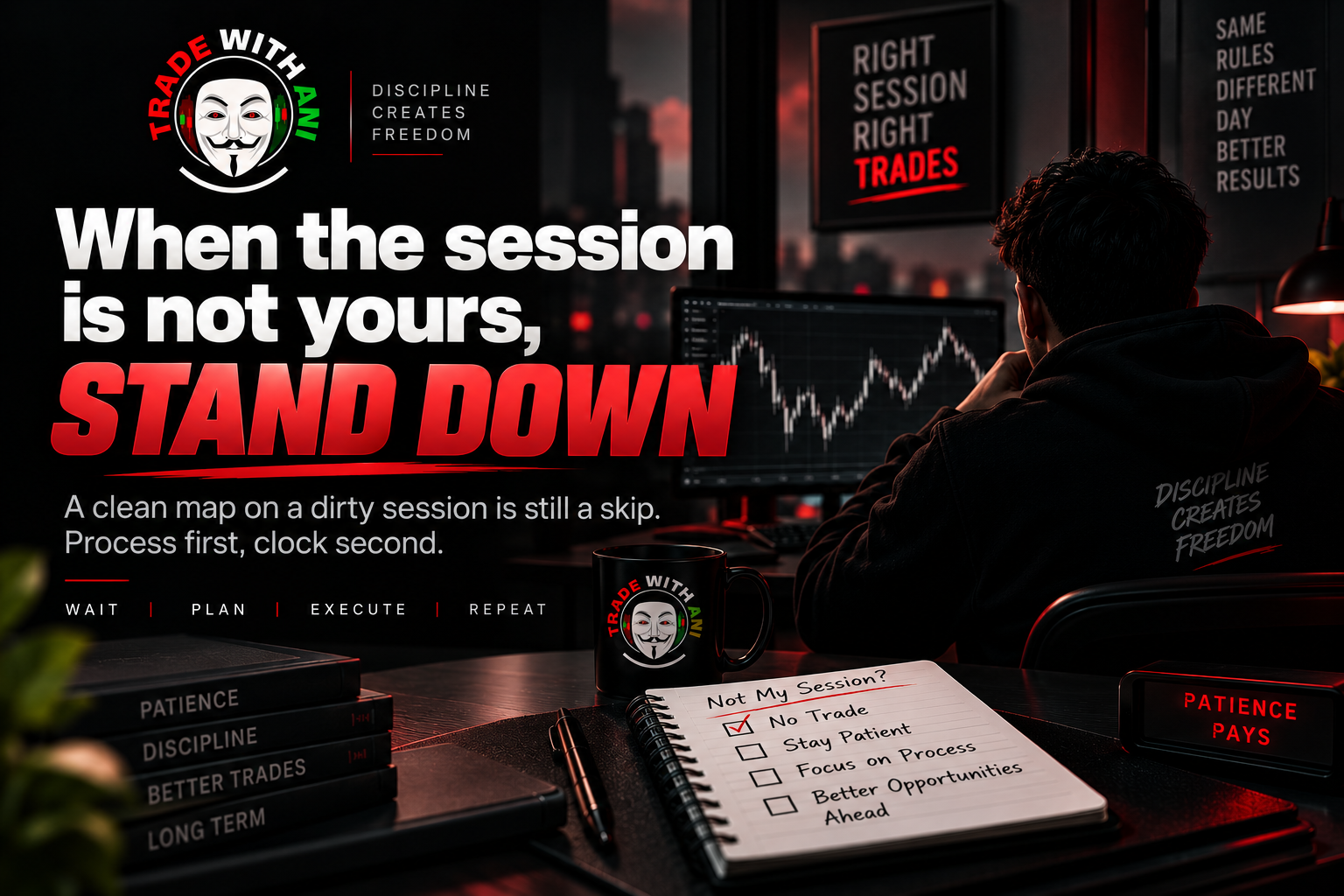
Nifty and Bank Nifty can be the same book
If both ideas die on the same headline, you are not diversified. You are leveraged.
Read the note
A journal beats a highlight reel
Log the map, the invalidation, the size and the emotion. That is the classroom book.
Read the note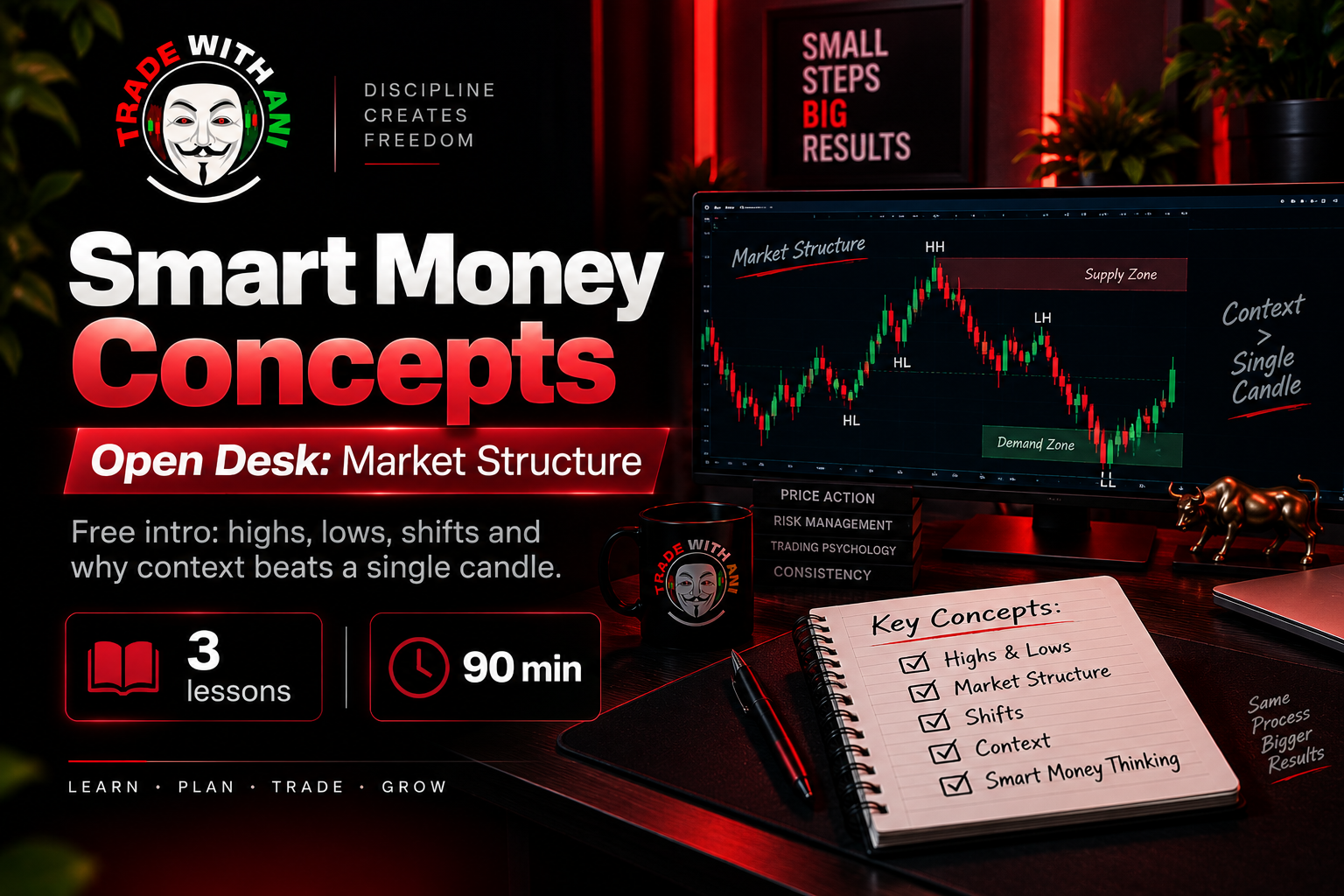
When the session is not yours, stand down
A clean map on a dirty session is still a skip. Process first, clock second.
Read the noteNext step
Ready to Start?
Talk to us or pick a course.